

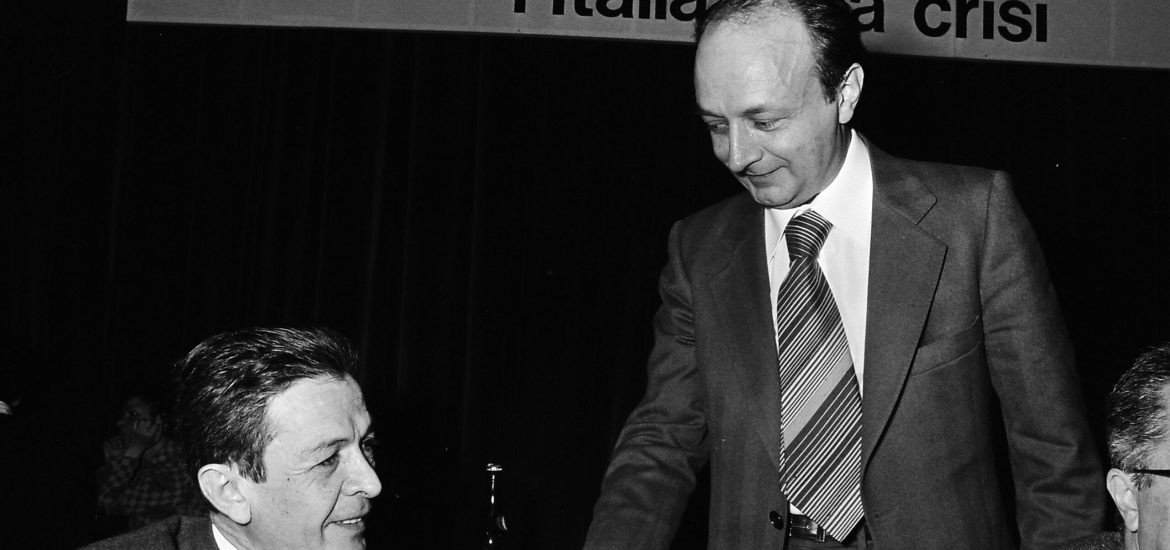

He died in his Milan at 92 years old, of which 43 were spent in the PCI, which he joined at 15 in 1948 entering the Gramsci section with his friend Paolo Santi, as recalled by the even closer friend, I believe, Paolo Franchi in Corriere della Sera, Gianni Cervetti did not take many secrets to the grave. The last ones he wanted to get rid of he wrote in a book that will be published in a few months by the Nave di Teseo editions, perhaps with the title he himself suggested of a Milanese education or adventure.
Sent by the party to study and graduate in economics in Moscow, Cervetti knew like few others the relations of the PCI with Moscow and the funding received until just past the mid-1970s: the famous “gold” in the title of one of his books published in 1993, when the PCI had already stopped calling itself that to continue in other editions and with other names. He had known and experienced those relations so much and so well that when the communist secretary Enrico Berlinguer decided to give them up to free himself from them, it was precisely Cervetti to whom he entrusted the matter, carried out with a diligence and discretion all Milanese.
Of Enrico Berlinguer, after the experience of the so-called national solidarity with the DC supporting from the outside two single-party governments, Cervetti also tried to be a good political advisor, as well as responsible for the party organization. Bobo Craxi has just recalled in Il Riformista the Milan-Inter derby of autumn 1979 in which the Juventus fan Berlinguer was a guest, in the stands, of his father Bettino to then meet him and discuss politics, not football, in a reserved location chosen and booked by Carlo Tognoli on behalf of the PSI and by Cervetti on behalf of the PCI. “I still remember the faces of Tognoli and Cervetti at the exit of the meeting,” Craxi’s son recounted specifying: “They had an amused, almost sly expression. The conversation lasted little, but enough to make that Sunday afternoon memorable.”
However, the effects also lasted little. Berlinguer ended up influenced within a few months more by the antisocialism of his spokesman, and not only, Tonino Tatò, and his daily notes, than by Ambrosian filosocialism, or Cervetti’s rejection of antisocialism. With Craxi arriving at Palazzo Chigi in 1983 amid the fears and discontent of the communists in opposition, the following year saw the famous socialist congress in Verona where the guest Berlinguer was booed for his line of strong opposition to the government and the PSI. Craxi in his reply speech, instead of apologizing, clarified that he had not booed either because he did not know how to do it. Something that Berlinguer’s family later did not want to forgive him when the Prime Minister rushed to the hospital in Padua where the communist secretary was dying after an electoral rally.
Filosocialism or reformist migliorismo caused Cervetti painful experiences during the hellish judicial, media, and political season of “mani pulite” (clean hands), as recounted by Paolo Franchi in Corriere della Sera to renew solidarity with him even after death. “Passing by car – Franchi wrote – in front of a factory occupied by workers in struggle, he stopped to inquire about the progress of the dispute and left them (solidarity is also this) a fifty-thousand lire note. Shortly after, it was returned to him with a few lines of accompaniment: they did not want stolen money.” “That remained his bitterest memory,” Franchi recounted. The bitterest – after five years spent as a defendant in Tangentopoli before acquittal – of a left that could not have served its cause worse, ending up where it ended, in Giuseppe Conte’s chase on the sand of the so-called broad field of the alternative to the government, close to the record for longevity in the history of the Republic.


