The «kei cars», those Japanese city cars that make people dream. These vehicles, less than 3.40 meters long, represent over a third of the Japanese automotive market. Popular and economical, they have never been launched in Europe, writes Le Monde.
They do not exceed 3.40 meters in length by 1.48 meters in width, but they can reach 2 meters in height. In Japan, these small cars called kei cars represent 36% of the automotive market, that is 1.3 million vehicles per year, including commercial models. They can be seen coming out of very narrow garages, where only they can fit, in the small houses between Tokyo and Yokohama. Charming, energy and resource efficient, why haven’t they conquered the rest of the world?
For Yuuki Tanaka, product director for this category of cars at Nissan, these cars are hardly exportable as they are closely tied to the country’s history, taxation, and culture. “This category of kei cars was created by the government after the war,” he explains, “to address two problems: poverty and poor road infrastructure quality.”
From the start, these small vehicles with engines limited to 660 cubic centimeters have benefited from tax breaks and reduced insurance premiums. Their dimensions respond well to the difficulty of driving in some neighborhoods with winding alleys. “In Europe, a car like the 2CV played the same social role as kei cars,” recalls the Nissan expert, “but here it was institutionalized in a permanent system.”
The Japanese, explains Yuuki Tanaka, have a well-known phrase to describe the situation: “Buying a car is not expensive in itself, owning it is, year after year.” There are many reasons: in Japan, cars must undergo technical inspections twice a year, insurance costs are very high, as is maintenance. Kei cars cost less on these three fronts, and also in terms of fuel. Above all, their owners pay only a third of the taxes charged to a traditional car.
Toyota, Suzuki, Honda: their weight on the Japanese market is such that it overturns the hierarchy of manufacturers. Toyota is always in first place, but the “kings” of kei cars occupy the next podium steps: Suzuki (which owns the Daihatsu brand and sells more than half of these mini-cars), followed by Honda (with its bestseller, the N-Box, a small cube that maximizes the allowed height). The best-selling model in Japan today, the Suzuki Hustler, looks like a miniature Hummer with a starting price under 10,000 euros.
[…]Smaller, lighter, aren’t these cars more dangerous in case of an accident or collision? “Kei cars are designed to avoid accidents, not to withstand them due to their gross weight: they are therefore equipped with numerous sensors, driver assistance devices, automatic emergency braking, and 360-degree vision,” replies Yuuki Tanaka.
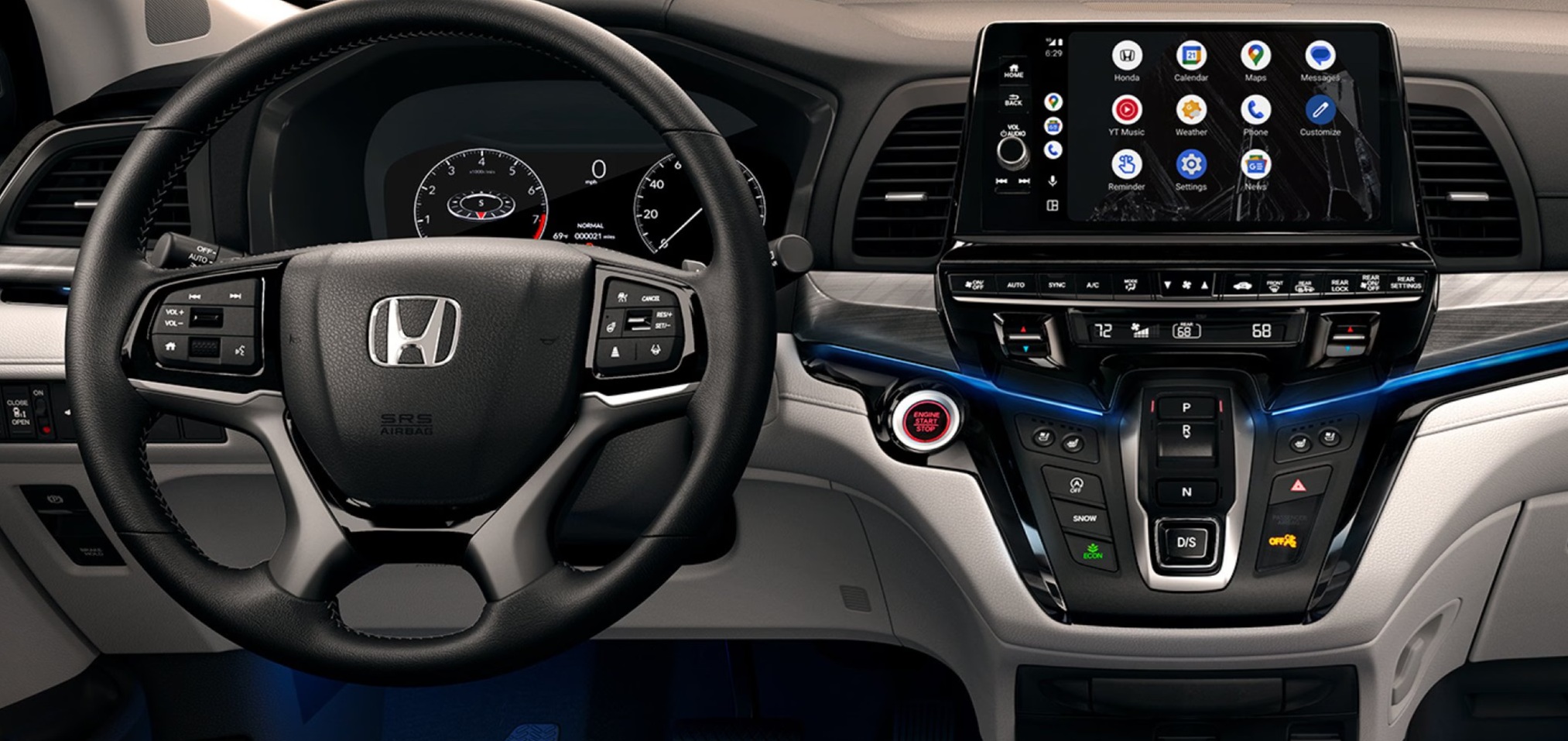
In the Sakura that Le Monde tested on the streets of Yokohama, the driver sits in a raised position, with excellent visibility. The car, extremely maneuverable, warns when approaching too close to the vehicle ahead and signals when it moves off in a traffic jam or at a red light. The GPS is very readable. “All these driver assistance services are as sophisticated as those of higher category cars,” specifies the engineer. Sometimes even more. Nissan is about to offer almost autonomous driving on its kei cars, models that are among the most expensive: the Sakura’s price starts at 13,600 euros.
Today, buying a kei car is not necessarily a matter of means or lifestyle. It also responds to Japanese culture, where sobriety is preferred over excess, the necessary over the superfluous; and to regulations, since you cannot have a car without owning a parking space. Or to a life stage: “Drivers aged 50 or 60, when their children are adults, often switch to a kei car,” observes Yuuki Tanaka.
That is why Nissan is focusing on the development of autonomous or semi-autonomous driving, which will help older drivers, especially in rural areas poorly served by public transport. Parents with small children also appreciate them, especially the cubic models with sliding doors – like Nissan’s small Roox – which allow the little ones to stand on the rear seat and change before and after their sports activities.
Why haven’t these small-sized models, which respond to the frugality required by the fight against global warming, been attempted in Europe? There is obviously the fundamental issue of crash tests, which these light and short cars do not pass, pushing manufacturers to favor increasingly large and heavy vehicles. […]
This does not prevent some French actors, such as CGT-Métallurgie, from defending this model, promoting production of these small cars with a short supply chain, particularly in the Paris region, where the last automotive production plant, Stellantis in Poissy, is about to close. For now, the idea has not gained traction. Smart, a joint venture between Chinese Geely and Mercedes, will nevertheless launch a compact model, 2.79 meters long, returning to the origins of its success. But still two-seater, and not four like kei cars.
(Excerpt from the foreign press review by eprcomunicazione)