

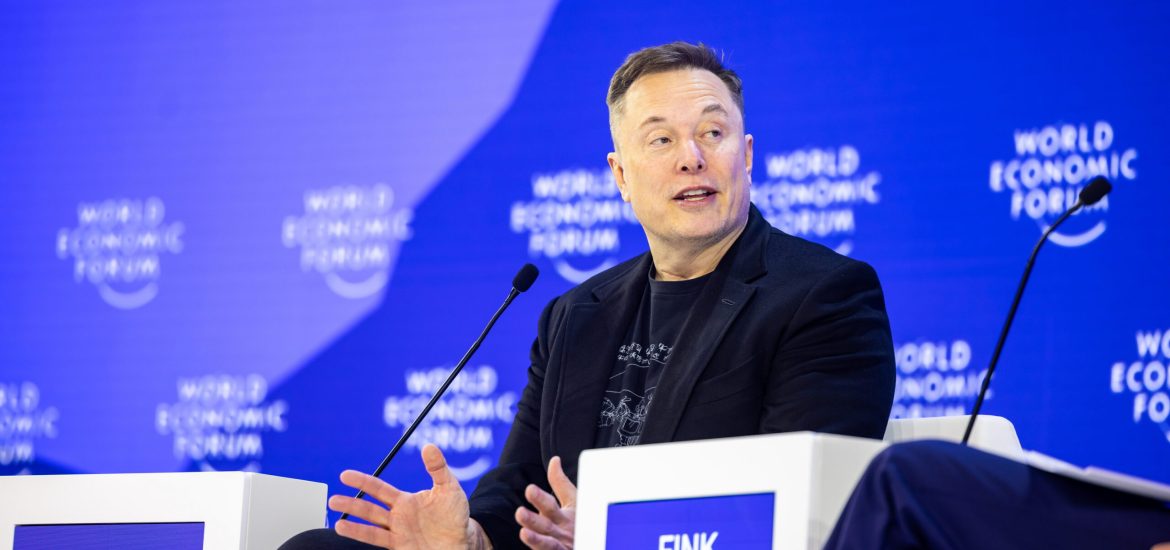

Elon Musk ignored the summons to appear Monday morning before Paris prosecutors investigating him and his social media company X, further escalating tensions between the French judicial system and the American tech giant, writes the Nyt.
INVESTIGATION AND POSSIBLE CHARGES
Musk’s absence came more than two months after French police raided X’s Paris headquarters as part of a lengthy investigation conducted by the cybercrime division of the Paris prosecutor’s office. Prosecutors have been investigating X since January 2025 and have mentioned considering seven possible charges under French law, including complicity in the distribution of child sexual abuse images, production of content denying crimes against humanity, and fraudulent data extraction. On the day of the February raid, Musk was summoned in April for a meeting with the investigating judge to discuss possible charges. This invitation is an established practice in the French judicial system, during which individuals in Musk’s position can “present their version of the facts and the compliance measures they intend to implement,” as stated at the time by the prosecutor’s office.
MUSK’S REACTION AND INVESTIGATION DEVELOPMENTS
Musk’s absence was predictable after he harshly condemned the investigation, calling it a “political attack.” The prosecutor’s office did not announce any immediate legal consequences for his failure to appear. Musk did not respond to a request for comment.
The investigation began following French concerns regarding X’s algorithm, the digital process that organizes data on the platform, and later expanded after further allegations that Grok, X’s AI-based chatbot, was spreading Holocaust denial and sexually explicit deepfakes.
X’S POSITION
After the February raid, the company’s global government relations office stated in a press release that it “categorically denies any wrongdoing” and claimed the investigation “distorts French law, circumvents due process, and endangers freedom of expression.”
Separately, in January the company said it had limited Grok’s image generation to prevent the spread of sexualized images. In a statement released Monday, the Paris prosecutor’s office said Musk’s absence “will not hinder the continuation of the investigation.” It also specified that the judiciary is independent as “the French Constitution guarantees the separation of powers.” The case is at the center of a broader controversy between American tech companies and European governments regarding the extent to which such companies should be held responsible for content on their platforms.
EUROPEAN UNION RULES
The European Union has enacted strict digital regulation, threatening tech companies with fines if they do not monitor their platforms to combat illegal content, disinformation, and hate speech. In December, the EU imposed the first penalty under the new Digital Services Act, fining X $140 million for violations. The following month, EU regulators announced an investigation into X for the dissemination of sexually explicit images generated by Grok. French authorities have shown a rare willingness to prosecute high-level tech executives, holding them personally accountable for user behavior on their platforms.
TRANSATLANTIC TENSIONS
The issue became particularly tense under the Trump administration, which adopted increasingly aggressive tones, both verbally and operationally, toward Europeans associated with the push to regulate American tech companies.
The controversy reflects a transatlantic disagreement over how and whether to regulate social media.
Europeans assert that their measures aim to protect users from offensive content.
FREEDOM OF EXPRESSION AND REGULATORY CONFLICT
The Trump administration describes the fines as unjust extortion against American companies and argues that the regulations represent an attack on free speech. In the United States, legal restrictions on freedom of expression are very limited. In France, for example, criminal penalties exist for hate speech, Holocaust denial, and glorification of terrorism.
(Excerpt from the foreign press review curated by eprcomunicazione)


