

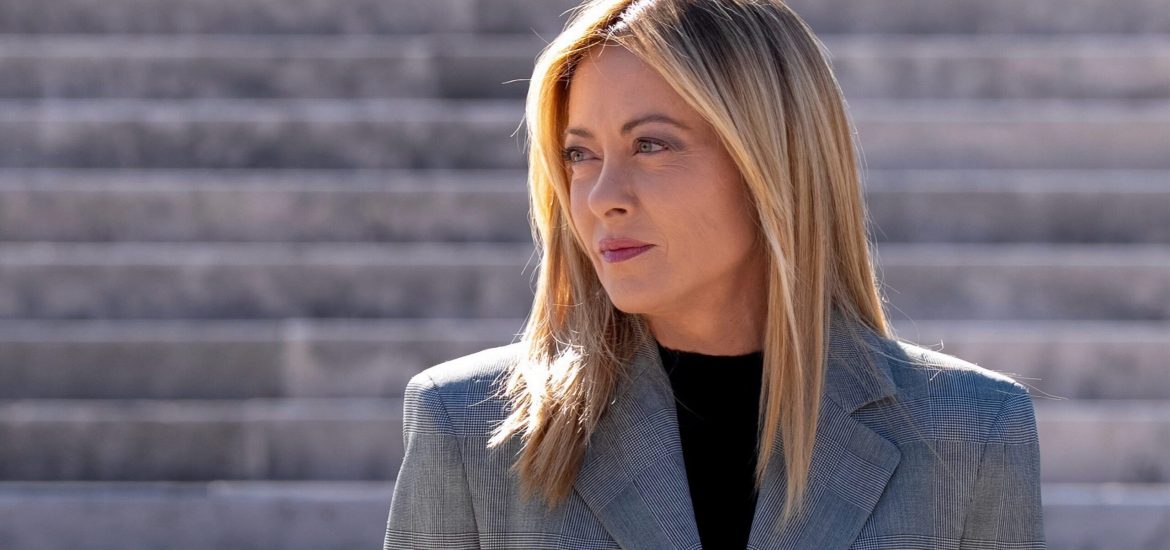

The first announcement was on April 9, during the urgent briefing to the Chamber on the Government’s action and the energy crisis. Giorgia Meloni had anticipated the mission, after the Gulf and Algeria: “I will soon go to Azerbaijan.” On April 13, Ansa spoke of “early May” and yesterday, at Federalberghi, the Prime Minister confirmed: “In a couple of weeks,” she will be in Baku on May 5.
The obvious objective, while specifying that the mission was initiated before the Iranian escalation, is to secure energy supplies and diversify sources. An even more strategic goal given the instability in the Middle East and the tensions in the Strait of Hormuz, whose intermittent closures put gas and oil supplies at risk, raising fears of energy shocks and price increases.
Azerbaijan is already a key partner for Italy: gas arrives in Puglia through the TAP, current supplies are around 12 billion cubic meters per year and the target is about 20, a quarter of national demand. But Baku also covers a significant share of Italy’s crude oil imports. In short, a stable alternative to supplies from the Persian Gulf and Iran, the cornerstone of a diversification of sources started precisely in Algeria and the Gulf. The Prime Minister’s line is that “instability has become normality” and Italy must prepare to reduce dependence on single geopolitical areas.
The relationship has broad implications, see the presence of the Azerbaijani state company Socar in Italy, possible agreements in Defense, interest in our industrial supplies, investments in renewables in Italy through sovereign funds. The mission to one of the few suppliers able to offer continuity and predictability in the short-medium term is pivotal. A hub for energy security, a crucial step for foreign and economic policy, a concrete response to Middle Eastern instability. Not a symbolic trip.
The opposition M5S speaks of “fossil diplomacy” and lack of structural investments in renewables, but Hormuz and the risk of shock make diplomatic acceleration indispensable and Azerbaijan unavoidable in mitigating immediate risk, as a security lever. Moreover, Azerbaijan’s gas capacity is undeniable: in the first quarter of 2026 exports reached 6.5 billion cubic meters (+8.3% year-on-year) of which about half to Europe, with the main fields at Shah Deniz, Azeri-Chirag-Guneshli, Absheron. But Baku’s strategy goes beyond and invests in renewables and nuclear. Socar is a leading industrial partner beyond borders and across refining and electricity.
The vision, according to Energy Minister Parviz Shahbazov, is a tripolar mix between natural gas, renewables (with projects up to 8 GW in the coming years) and civil nuclear, an “intelligent energy transition,” to position itself as a hub of Asia–Europe connectivity, a bridge not limited to hydrocarbons. Baku promotes interconnections with Turkey, Central Asia, initiates electricity projects with Kazakhstan and Uzbekistan. Relations in the Balkans see the project with Serbia on the construction of a gas power plant in Niš.
A country active on the diplomatic front, even in complex contexts. Noteworthy is the agreement with Russia on compensation for the Azal plane shot down in 2024, which relaunches a “mutually beneficial” cooperation. Azerbaijan remains however one of the most mine-contaminated countries in the world, following conflicts with Armenia, especially in areas regained after 2020. A danger for the civilian population, over 400 dead and injured, a brake on the return of displaced persons and an obstacle to reconstruction.
Also on this, Rome-Baku cooperation exists, including with private entities: Ettore Rosato, secretary of Copasir, and Ambassador Gianluca Brusco have defined demining a political and humanitarian act. Ambassador Rashad Aslanov speaks of mines as an obstacle to development and peace, recalls the 10 billion dollars invested in reconstruction, calls for greater cooperation. The relationship with Italy goes beyond energy.


