
The newspapers most committed to the NO front, which therefore proved to be in tune with a majority of the country in a very harsh and polarizing battle for consensus, are all in a phase of complex and often painful evolution.
And this leads to the thought that having an editorial line politically effective, being able to count on very visible opinion makers, in short, having great influence on public debate is now a matter completely detached from the accounts and economic sustainability.
The most striking case is that of Repubblica: precisely on the day of the referendum, perhaps by coincidence or as a communication strategy, John Elkann’s Exor officially announced the sale of the entire GEDI group except La Stampa to the Greek holding Antenna, about which little is known despite the investigative efforts of journalists from the very newspapers subject to the sale.
In recent months, the government had also hinted at the use of golden power, as if GEDI were a strategic asset for national security, but that controversy also faded away in the noise of the electoral campaign.
And the sale was completed in general indifference, just a week after the closing of the celebratory exhibition in Rome for the newspaper’s fiftieth anniversary. Inaugurated by the President of the Republic Sergio Mattarella and symbolically closed by the sale.
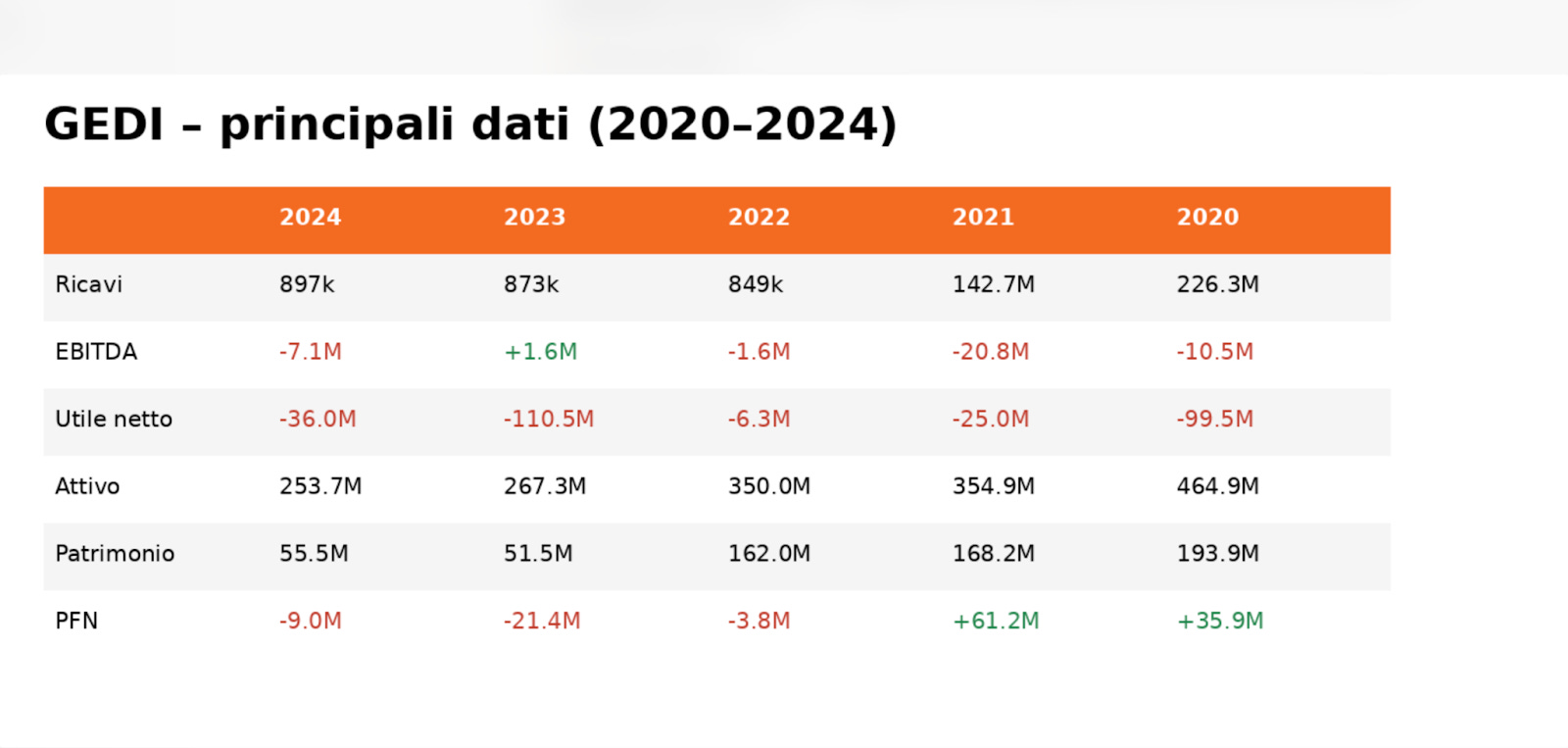
For some years now GEDI is no longer listed on the stock exchange, so there is less information, and it has changed its corporate perimeter several times, making comparisons with the past difficult. But since 2020, when John Elkann entered with Exor, GEDI has accumulated about 277 million euros in losses and does not seem to have margins for recovery with the same business model.
La Stampa was left out of the sale operation from Exor to the Greeks of Antenna, it passes to the SAE group led by Alberto Leonardis, but it is not certain that this is more reassuring news: as Gianni Dragoni reconstructed in Fatto Quotidiano, Leonardis is a “capital aggregator” who does not have: in recent years he has acquired many local newspapers abandoned by the GEDI group, from Tuscany to Emilia-Romagna to Sardinia, but the capital came from third-party partners. Leonardis controls only 3 percent of SAE’s capital; the rest requires partners.
In Sardinia, for example, Leonardis has built an editorial operation centered on two strong local powers, Antonello Cabras and Michele De Pascale, the latter owner of the Cagliari airport.
Nothing new, newspapers have always been in the hands of entrepreneurs seeking influence and with interests in other sectors: but usually a conflict of interest corresponds to some tolerance for losses. If you want influence with newspapers that do not have sufficient revenues, you must be prepared to bear costs.
Today, however, this no longer seems to be the case: in the struggling sector, impure publishers manage to have newspapers without major investments.
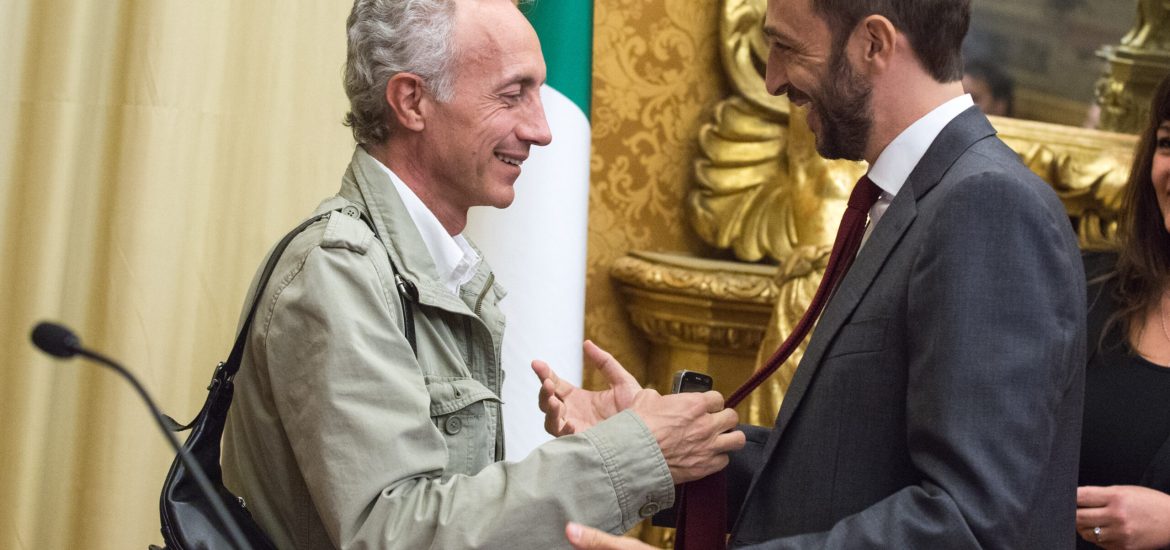
The case of Fatto Quotidiano is different: as in the 2016 referendum, when I also worked there, it was the real coordination center of the NO referendum campaign. And, as in 2016, its editor Marco Travaglio was the most recognizable face of the opposition to the constitutional reform.
Precisely in the days of the referendum, when Fatto demonstrated its maximum political impact, the publishing company SEIF announced the decision to request public funding that contradicts the newspaper’s own headline, which reads “does not receive any public funding.”
In a statement, the company announced it had applied for an “extraordinary contribution to publishing for the printing of newspapers in the amount of 10 cents per copy sold” provided by a decree of the Meloni government in December.
It is not the discretionary contribution to newspapers managed by Palazzo Chigi that Fatto has always contested, but it is still a necessary public aid, the company writes, “to guarantee business continuity, support the ongoing digital transition and prevent possible risk situations.”
Both the company and editor Travaglio, to reassure an audience educated to distrust public funding, said the hope is not to need it. If there are enough subscriptions and advertising, the company will not collect it.
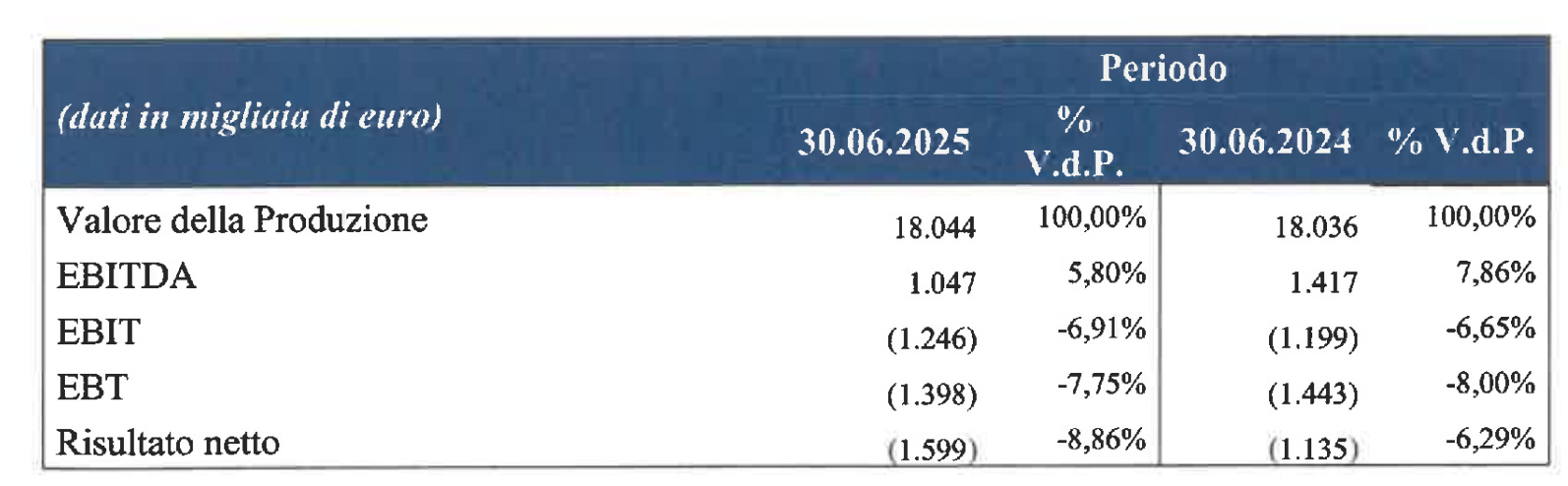
In reality, the situation of Fatto Quotidiano is peculiar: since the company is listed on the stock exchange, it publishes semi-annual management reports.
In the latest, that of June 30, 2025, it reads that the newspaper’s high influence corresponds to a solid business model, in the sense that the gross operating margin measuring the performance of the core activity is positive by over one million euros. But when amortizations for past investments, especially in television, which evidently did not yield the expected results, are added, the final result is a heavy loss of 1.5 million euros in six months.
Domani, the newspaper I founded and directed until 2023 and which was strongly aligned with the NO, also announced a change in the corporate structure expected since its birth almost six years ago in 2020: ownership should pass from publisher Carlo De Benedetti to a foundation. And the control of a non-profit entity is one of the requirements to become eligible to receive funds from the publishing department of Palazzo Chigi.
Fatto Quotidiano suffers, like many other newspapers, an evolution of the context that has become increasingly difficult and is now being disrupted by the arrival of artificial intelligence.
The spread of chatbots like ChatGPT or Claude is causing traffic to newspaper websites to collapse, both because people get information directly from AI services and because search engines offer self-produced content instead of directing elsewhere. And so one of the revenue sources, online advertising, collapses.
Meanwhile, social media have evolved into a video-centered dimension, contributing even less than before to bringing traffic and promoting subscription sales, while AI allows journalists with their own audience to go independent, because much of the work done by editors and support figures in journalistic activity has been automated.
Therefore, the “big names” once brought revenue to newspapers that paid them a salary; now they manage to keep most of the value generated for themselves. And the most successful case in Italy is precisely that of a “big name” from Fatto Quotidiano, Selvaggia Lucarelli with her newsletter Vale Tutto.
(Excerpt from Notes)