

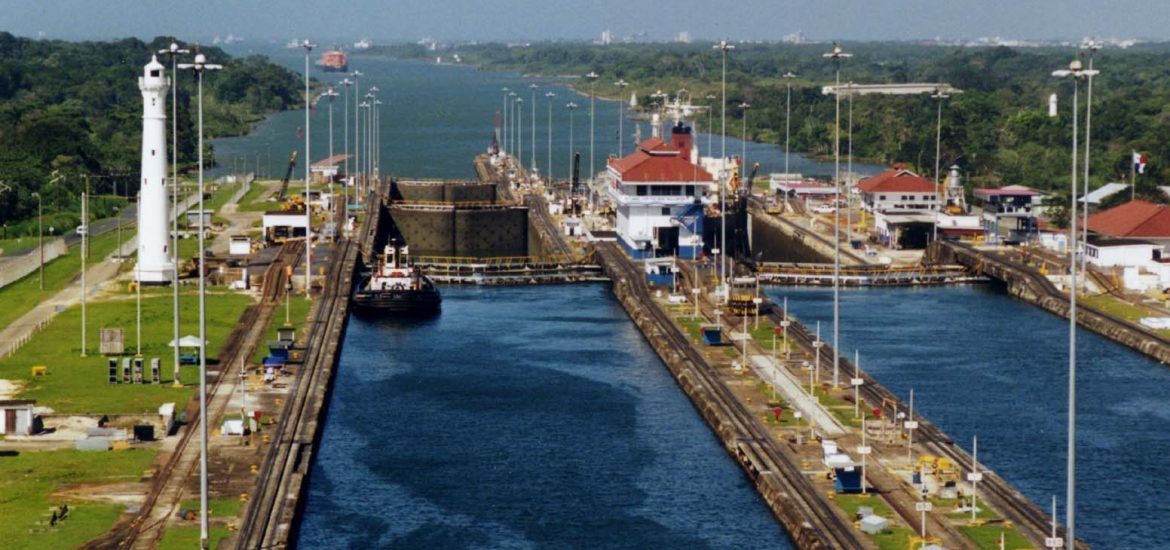

With the Strait of Hormuz blocked due to the war between the United States, Israel, and Iran, prices for crossing the Panama Canal have reached record levels.
THE VALUE OF THE PANAMA CANAL
The Panama Canal is already the second busiest artificial shipping route on the planet, after the Suez Canal, and handles 2.5 percent of global maritime trade, according to a McKinsey study: however, the majority – over 70 percent – of the vessels passing through it either come from or are headed to U.S. ports.
THE INCREASE IN DEMAND (AND FEES) FOR CROSSING
Canal transit fees are the largest source of revenue for Panama. Compared to pre-war levels with Iran, daily auctions for canal crossings have attracted five times as many bids, and prices for Panamax locks – the system that, by adjusting water levels, allows ships to pass – now hover around $837,500, according to Argus data reported by the Financial Times. Asian countries, in particular, being the most dependent on fuel supplies from the Persian Gulf, are seeking alternatives.
Ross Griffith, an Argus analyst, explained to the British newspaper that “about 70 percent of the ships transiting the Panama Canal use the original Panamax locks, whose auction prices have increased nearly tenfold since the start of the war with Iran and the closure of the Strait of Hormuz. This is a very significant increase,” he added, “reflecting how Asian buyers are desperately trying to procure oil, fuel, and bulk goods like coal, mainly from the U.S. Gulf Coast.”
IT IS A VERY FAVORABLE TIME FOR THE UNITED STATES
The United States is the world’s largest producer of crude oil and natural gas, and thanks to the war with Iran – or more precisely, thanks to increased Asian and European demand – it has nearly reached the status of net oil exporter for the first time since World War II.
The Panama Canal represents the shortest route between the U.S. Gulf Coast, where hydrocarbon export terminals are concentrated, and Asia, although shipments bound for this region usually pass around the Cape of Good Hope, at the southern tip of Africa. The increase in traffic of American oil tankers and LNG carriers has raised waiting times to cross the Panama Canal to 4.25 days, according to Kpler data. Some companies have been willing to pay large sums – up to $4 million – to skip the queue.
WHO CONTROLS THE PORTS ON THE PANAMA CANAL
At the end of February, the Panamanian government implemented a Supreme Court ruling that, a month earlier, had annulled as unconstitutional the contract that allowed the Chinese conglomerate CK Hutchison to manage the two ports at the ends of the Panama Canal: Balboa on the Pacific Ocean, and Cristobal on the Atlantic Ocean. The contract in question, dating back to 1997, had been extended in 2021 for another twenty-five years without a tender being called.
Operations have been provisionally entrusted to two European shipping companies: Terminal Investment Limited, a subsidiary of Mediterranean Shipping Company (MSC), manages the port of Cristobal on the Atlantic side. APM Terminals, a subsidiary of Maersk, is responsible for the port of Balboa.


