

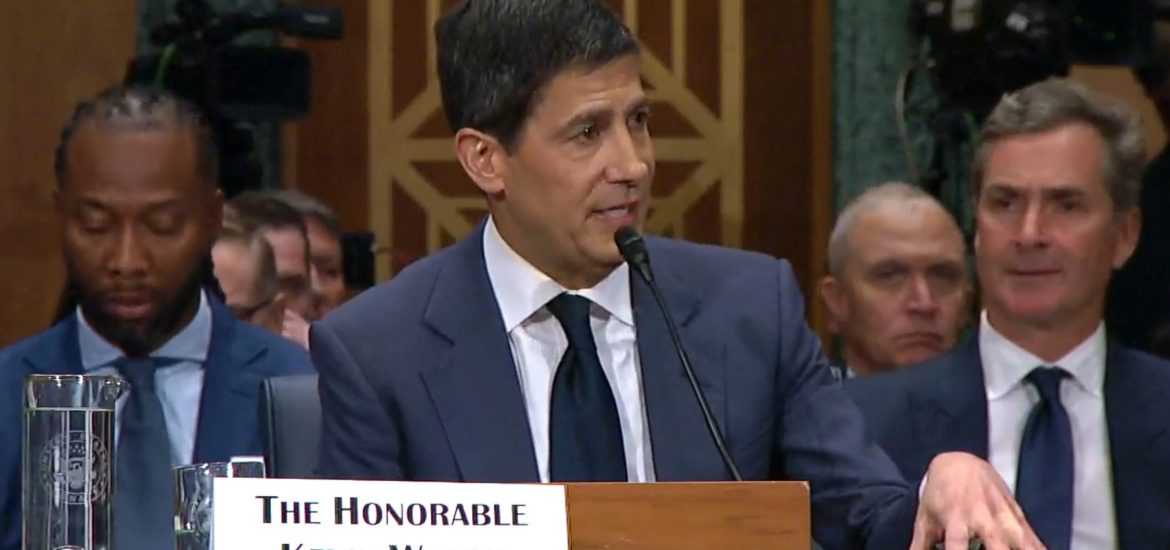

With Jerome Powell no longer leading the Federal Reserve, while remaining a member of the FOMC, and Kevin Warsh as chairman, some elements of U.S. monetary policy appear set to change, while others remain firmly confirmed.
Among the aspects that remain unchanged is the strong commitment to ensuring price stability. Warsh emphasized that inflation is still well above the Fed’s target and that this situation has persisted for five years. For this reason, he reiterated the central bank’s determination to bring inflation back under control.
The main novelties concern the approach to communication. Indeed, what Warsh calls a “new chapter” opens, characterized by the absence of forward guidance both in the statement and during the press conference. Even the interest rate projections prepared by FOMC members are being downplayed in their role: Warsh did not publish his own estimates and highlighted that no Committee member feels bound, in future meetings, by the indications reported in the projections. The goal seems to be to break the circular relationship that in recent years has seen markets merely assimilate the Fed’s messages. On the contrary, Warsh appears intent on fostering a greater market ability to price based on available data, allowing the central bank to receive the interpretation that markets give of economic developments.
Looking ahead, five working groups will be tasked with reviewing some topics deemed worthy of a new evaluation. The areas of analysis will concern Fed communication, the central bank’s balance sheet, and the pros and cons of the current abundant reserves regime, which remains in place for now. The use and reliability of existing statistical sources will also be examined, with the possibility of introducing new tools to improve the informational quality of data, as well as productivity and employment dynamics and the framework used to analyze inflation. The 2% target is not in question, but rather the understanding of the factors determining price trends.
Regarding the macroeconomic framework, Warsh, as anticipated, believes that inflation remains too high and emphasizes that this condition has persisted for five years, without attributing it exclusively to the energy component linked to supply shocks. The labor market is described as stable and, according to some observers, improving. However, Warsh clarified that often the direction of the trend is more important than the level reached. At the same time, a strong acceleration in productivity is not yet seen. Investments in artificial intelligence are already supporting demand and contributing positively to economic growth, while on the supply side the productivity benefits are not yet clearly observable.
Within the FOMC there remains significant heterogeneity of views. Eight members foresee unchanged rates during the year, only one hypothesizes a 25 basis point cut, three see a 25 basis point increase, five expect two hikes, and only one foresees three increases in benchmark rates. Overall, rate projections show an upward trend and the distribution of expectations is shifting towards higher levels not only for 2026 but also for the following two years, in light of an upward revision of core inflation expectations for 2026 and the subsequent horizon.


