

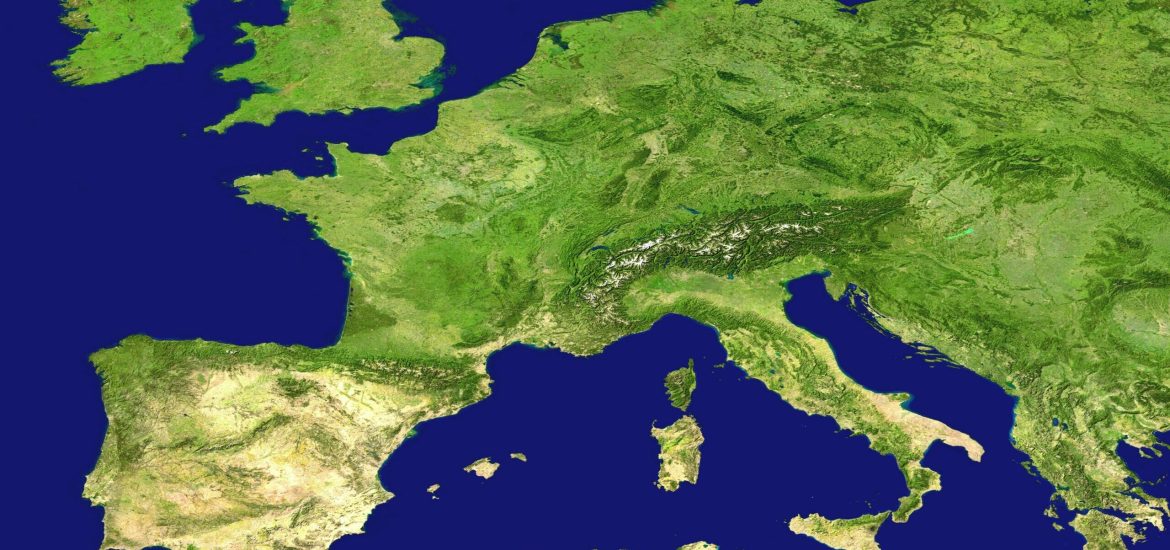

Europe is in the midst of a global earthquake. Four different and simultaneous fault lines interact with each other, amplifying instability: the war in Ukraine, the rivalry between the United States and China, instability in the Middle East, and the surprising transformation of the American posture towards Europe. Experts speak of a “polycrisis,” a condition in which multiple sources of instability intertwine and amplify each other.
The “polycrisis” currently affecting Europe perhaps represents the last chance to complete the transformation of the Union: from a monetary and commercial area to a geopolitical power, capable of acting with strategic cohesion in the face of the systemic challenges of our time.
There are at least three strategic lines in this process.
EUROPEAN DEFENSE AND THE RETURN OF SECURITY
The first is the return of defense to the center of the European project. After decades of substantial delegation to the United States, the European Union is forced to confront a dimension that seemed relegated to the past. Eighty years after the end of World War II and over seventy years since the Schuman Declaration, the sinister wails of air raid sirens echo once again in Ukrainian cities. War has returned to the continent, along with the awareness that European security can no longer be taken for granted. National governments are increasing military spending, and the European Commission openly speaks of “ReArm Europe,” marking a change of pace unthinkable just a few years ago.
THE CHALLENGE OF INDUSTRIAL COMPETITIVENESS
The second strategic line concerns industrial competitiveness. The Draghi Report was a rude awakening for Brussels, putting in black and white the delay accumulated by Europe compared to the United States and China: without a massive return to investments in production capacity, energy, and advanced technologies, the Union risks a slow, progressive economic and political decline.
In this context, the European common debt, modeled on Next Generation EU, returns to the center of the debate as an indispensable tool to finance continental strategic projects and reduce external energy dependencies.
GLOBAL GATEWAY AND THE INFRASTRUCTURE CHALLENGE
The third strategic line concerns the geopolitics of supply chains and infrastructure. Through the Global Gateway program, Brussels attempts to build a European alternative to the Chinese Belt and Road Initiative, mobilizing up to 300 billion euros for investments in logistics corridors, energy networks, submarine cables, critical raw materials, and digital infrastructure. The goal is twofold: to ensure safer and more resilient supply chains and, at the same time, to preserve Europe’s political influence capacity in strategic areas such as Africa and the Middle East.
HOW MARKETS AND INVESTMENTS ARE CHANGING
The ongoing transformations also affect financial markets and investors. Investors have always found diversification opportunities in investment themes, and transformations like those underway are strongly thematic. The recent weakness of European defense sector stocks was surprising, probably attributable to the timing of investments: unlike investments in AI, decisions in the defense sector have long timelines.
In any case, investments in the sector are destined to increase with far-reaching implications in military, industrial, technological, and production matters, including cybersecurity, satellites, and electronic components. However, it is a particularly sensitive sector, and therefore political catalysts are necessary: coordination of spending programs and greater integration among national states.
THE “NEW ENERGY ORDER”
The energy transition is proving more complex than imagined just a decade ago. At GAM Investments, we define this phase as the “New Energy Order”: a scenario in which companies linked to fossil fuels, firms active in renewable energy, and operators in the “Oilfield services” sector coexist, that is, companies providing technologies, equipment, and specialized services for exploration, drilling, production, and maintenance of oil and natural gas wells.
AI AND THE NEW CAPITAL CYCLE
Investments in artificial intelligence probably represent the largest capital expenditure (capex) cycle of recent decades.
However, the extraordinary scale of these investments is changing the market focus: attention is progressively shifting from spending volumes to the capacity and speed with which such investments will translate into sustainable profits.
Artificial intelligence also represents a strategic challenge for Europe. The potential gains in productivity and margins appear enormous: sectors such as civil aerospace, the automotive supply chain, and, more generally, large labor-intensive industrial conglomerates could particularly benefit.
THE END OF THE ILLUSION OF ECONOMIC LIGHTNESS
The real novelty of 2026 is perhaps the end of the illusion of economic lightness. After a decade dominated by near-zero interest rates, digital economy, and frictionless globalization, capital returns to having a “heavy,” material dimension. Energy, networks, infrastructure, manufacturing, and production capacity regain a central role in economic and geopolitical strategies.
The great paradox of the artificial intelligence era is precisely this: the more the world becomes digital, the greater the value of physical infrastructure. Ecological transition, energy security, and industrial policy are no longer separate fields but deeply intertwined dimensions. There is no strategic autonomy without energy, just as there can be no AI development without networks, data centers, and advanced infrastructure.


