



Shake-up at the top of the National Cybersecurity Agency. Andrea Quacivi, former CEO of Sogei, takes the place of prefect Bruno Frattasi. Thus, the long-whispered tensions in the press circles between Bruno Frattasi, recently former general director of Acn, and Alfredo Mantovano, undersecretary with delegation for national security, have come to an end with the resignation of the 70-year-old former prefect of Rome.
THE AGENCY’S STRUGGLES
The Agency, retracing frame by frame the film of the recent period, had long been at the center of controversies, exposed to crossfire from detractors, between the sensitive data of Ferrovie dello Stato ending up on the dark web after the breach of Almaviva’s defenses and the IT mishaps that in early May turned upside down the IT system of Justice, overwhelming all offices nationwide and those of the central ministry, with very serious repercussions on institutional activity.
THE RIFT BETWEEN FRATTASI AND MANTOVANO
For Frattasi, the intrusion of unknown hackers into the Uffizi Galleries, one of the largest and most famous repositories of the world’s artistic heritage, whose security system had long been, perhaps since summer 2025, under hacker control—surfacing only last February with news broadcasts worldwide showing the bricked-up underground accesses and the Medici collections urgently moved to the Florentine vault of the Bank of Italy to prepare for the worst—could have been fatal.
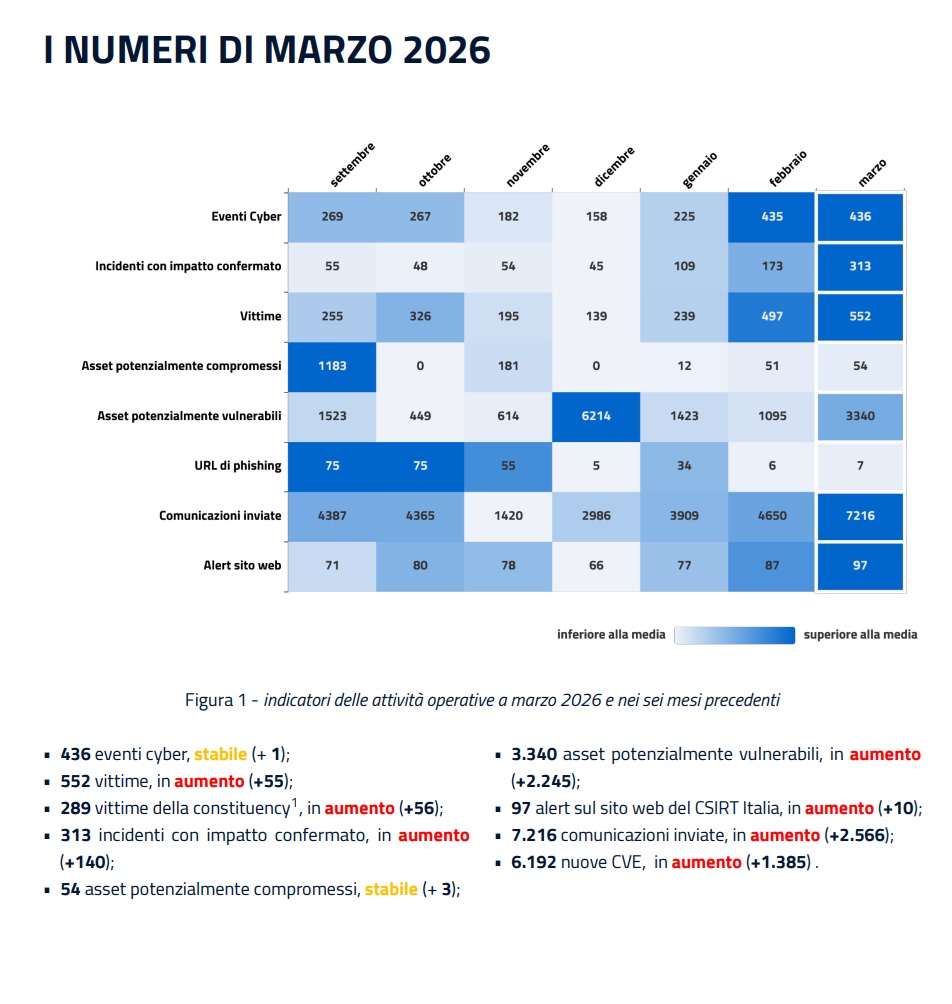
And it matters little if, as Il Sole24Ore recalls today, Frattasi had tried to counterbalance by claiming the success of the Milan – Cortina Winter Olympics also on the digital front, since no sabotage events were recorded, because as is known only negative news makes noise. The same Agency in its Operational Summary notes that in March 436 events were recorded, balanced compared to 435 in February, while the number of incidents (313) increased by 81% compared to the previous month. Is it because more entities are monitored or is there something else? Someone else will try to answer this question.
WHAT IL FATTO QUOTIDIANO WRITES
Last year Il Fatto conducted some journalistic investigations regarding the nepotism perpetrated over the years within the Agency, with relatives and friends of politicians and high state officials, often without curricula consistent with the assigned duties, who found space supported by very high salaries, aligned by law with those of the Bank of Italy: “And when our newspaper also discovered that private phone numbers of the highest state offices were ‘hidden’ on the web but accessible to all, Frattasi’s staff responded that it was a ‘hoax’. Even though it was not so,” emphasizes Il Fatto.
OUT WITH FRATTASI, IN WITH QUACIVI
To preside over the agency born in 2021, which had already seen a mid-course change from professor Roberto Baldoni (now cybersecurity and technology advisor at the embassy in Washington), who was not much appreciated by the current government, to Frattasi, will be Andrea Quacivi, former CEO of Sogei, the general IT company of the Ministry of Economy and Finance. “After a professor and a prefect, now cybersecurity goes to a manager,” emphasize Linkiesta. But who is Quacivi?
QUACIVI’S CV
Here is his Curriculum Vitae. Graduated in Economics and Commerce, Quacivi was a consultant at Arthur Andersen, then moved to Wind, until entering Sogei of the Treasury in 2007, climbing up to hold the top role in 2017. Since 2020 he has held the same position at Geoweb. He is also a member of the board of directors of the Icsc Foundation, which manages the National Research Center in HPC, Big Data, and Quantum Computing at the Technopole of Bologna.


